
Subsiding shell
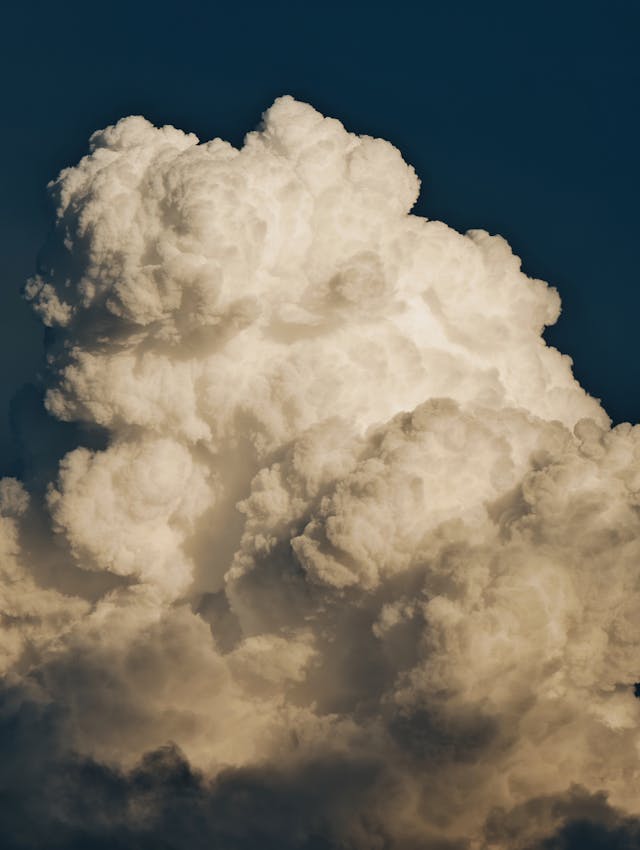
A rising cumulus cloud can be accompanied by a so-called “subsiding shell”. I.e. a layer of descending air at the cloud interface. This generates a lot of shear and turbulence, such that it affects the mixing processes between the cloud and its environment. Following the innovative setup of Nair et al. (2020)1, we can model these mixing processes with great detail. Their set-up is particularly appealing as it enables to zoom-in on the cloud interface without the burden of modeling the full atmospheric environment. Furthermore it uses a simplified thermo-dynamical description, whilst being able to capture the most prominent physical processes, visionary!
It should be noted that idealizations of the physical reality are often subject to a lot of scrutiny by the scientific community, as it can be hard to characterize the exact extend of the effects from these choices on the dynamics of the system.
Reference
Nair, V., Heus, T., & Van Reeuwijk, M. (2020). Dynamics of subsiding shells in actively growing clouds with vertical updrafts. Journal of the Atmospheric Sciences, 77(4), 1353-1369.↩︎